
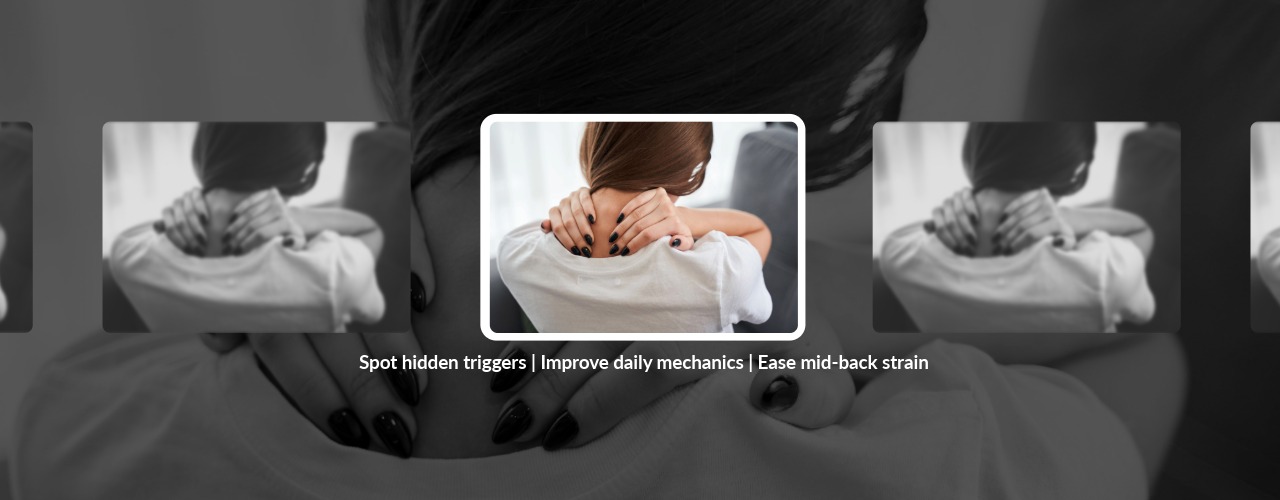
That persistent ache between the shoulder blades is something a lot of adults learn to work around. It shows up during long drives, long meetings, and long days at a screen. Shoulder blade pain causes are more specific than most people realize, and understanding what is actually driving the discomfort is what separates a plan that works from one that only helps temporarily.
Who Tends to Notice This First
This type of pain does not discriminate by job or activity level. But certain situations make it far more likely to develop.
Adults who spend most of the workday at a screen are particularly vulnerable. The head drifts forward, the mid-back rounds, and the muscles between the shoulder blades are held in a lengthened, strained position for hours. People in physically demanding roles who carry, lift, or work overhead repeatedly load the same area from a different angle. Adults who have had a previous neck or shoulder injury often develop compensatory tension patterns in the mid-back that eventually produce their own symptoms.
The Early Signs That Are Easy to Ignore
The body usually signals a problem long before it becomes disruptive. A dull ache between the shoulder blades that appears toward the end of the workday and settles with rest is easy to dismiss. A stiffness in the mid-back that takes a few minutes to work through each morning feels like a normal part of getting older. A tension headache that starts at the base of the skull and travels upward after long periods of sitting rarely gets connected to what is happening in the thoracic spine.
These are not random symptoms. They are a pattern with specific physical contributors.
What Triggers and Compounds the Problem
Daily habits and life demands feed shoulder blade pain causes in ways that accumulate quietly over time:
- Prolonged sitting in a fixed position compresses the thoracic spine and overloads the muscles that run between and around the shoulder blades
- Repetitive reaching, carrying, or overhead work without adequate shoulder and upper back strength places sustained demand on the same structures
- Poor sleep position or an unsupportive mattress keeps the thoracic spine loaded during the hours when it should be recovering
- Stress increases baseline muscle tension throughout the upper back and neck, adding to whatever mechanical load is already present during the day
- A history of shoulder or neck problems that were never fully resolved often leaves altered movement patterns that transfer excess work to the mid-back
A Prevention Plan Worth Following
Addressing shoulder blade pain causes before they become a persistent problem is straightforward when the right habits are in place. Practical strategies include:
- Moving regularly during sustained desk work rather than holding one position for extended periods
- Strengthening the muscles of the upper back and between the shoulder blades to build tolerance for the demands placed on them daily
- Reviewing sleep position and pillow height, since overnight loading of the neck and upper back significantly influences daytime symptoms
- Managing overall stress through consistent daily habits, since tension held in the upper back compounds mechanical contributors
- Addressing any unresolved neck or shoulder stiffness, since movement restrictions above and below the thoracic spine consistently increase the load on the mid-back
What the Evaluation at Rebound Physical Therapy Looks For
The assessment at Rebound Physical Therapy examines what is specifically driving the pain between the shoulder blades rather than applying a generic mid-back protocol. Your therapist checks thoracic spine mobility segment by segment to find which levels are restricted and contributing to symptoms. Shoulder blade muscle strength and activation are tested to identify the deficits that are allowing the area to become overloaded. How the neck and shoulder move is assessed because restrictions there consistently alter mid-back mechanics. Postural and movement habits during work-relevant tasks are observed to identify what has been loading the same structures day after day.
How Care at Rebound Physical Therapy Addresses the Problem
When prevention becomes treatment, the plan is built around what the evaluation finds. Hands-on joint mobilization of the thoracic spine restores the segmental movement that stiffness has reduced and directly relieves the mechanical pressure that has been building in the mid-back. Targeted strengthening of the shoulder blade and upper back muscles builds the capacity to handle daily demands without breaking down. Movement and postural coaching translate clinical gains into the specific adjustments that reduce ongoing stress during work, exercise, and daily life.
Taking the Signal Seriously
Shoulder blade pain causes can be addressed with physical therapy. The habits, movement patterns, and physical deficits that created the problem do not change on their own.
The team at Rebound Physical Therapy works with adults who are ready to understand what is behind their symptoms and address them properly. Contact Rebound Physical Therapy to schedule your evaluation and find out what your mid-back has been trying to tell you.


