
How Physical Therapy Tackles Hip Pain
You want to take care of some chores or go for a walk — but hip pain is keeping you on the couch. If this sounds familiar, know that you don’t have to suffer! At Rebound Physical Therapy, our physical therapists will guide you through a simple process to address your hip pain so you can get active again.
This newsletter will take you through that process, from understanding your symptoms to the outcomes you can expect from physical therapy. Still have questions? Call us to schedule an appointment!
Pinpoint Your Symptoms
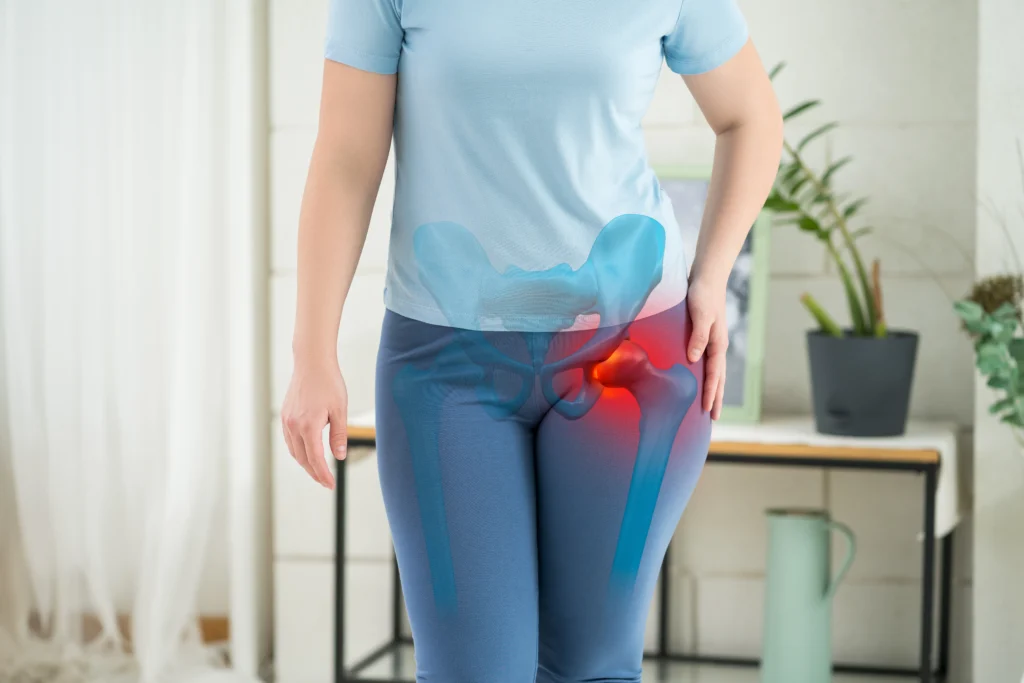
There are several potential reasons why someone might develop hip pain. To treat your pain effectively, we need to pinpoint what that cause could be.
When you visit us for your initial appointment, one of the first things we’ll do is ask you to share your symptoms. “Hip pain” often causes a lot more than just pain, and being able to describe your pain, mobility limitations, and other concerns helps us get a clearer picture of your condition.
For example, you know that your hip hurts. But when do you experience pain (i.e., during activity)? Does your pain come and go? Where do you experience pain? Is it just in your hip, or do you feel it elsewhere? Is the pain a dull ache? Sharp and shooting?
Make sure to share additional symptoms you might be experiencing, too. Here are some common ones:
- Stiffness/limited range of motion in your hip
- Weakness throughout the lower extremities
- Mobility issues, including walking, going up or down stairs, or struggling to stand up
- Difficulty performing everyday tasks, such as putting on your shoes — and let us know which ones
Identify a Cause and Develop a Treatment Plan
Thanks to your detailed symptom description — as well as a health history and comprehensive physical exam — your therapist should be able to determine the underlying cause of your hip pain.
If you’re 55 or older, there’s a good chance your hip pain stems from osteoarthritis. This degenerative condition causes cartilage and bone tissue to break down, leading to pain and restricted mobility.
However, hip pain can also stem from an injury. If you’re an athlete or particularly active person, you may have suffered an acute injury, such as a labral tear, in which a ring of cartilage in the hip socket becomes damaged. You may have also sprained your hip — that is, damaged the ligaments that hold the joint together.
However, even if you haven’t had an obvious injury, an injury could still be to blame. Overuse injuries are injuries that develop gradually and, in the hip, generally affect the soft tissue — your muscles, tendons, and ligaments. They usually occur due to repetitive movements or improper biomechanics.
Your treatment plan will vary based on the underlying cause of your pain, but in most cases, we aim to…
- Help manage acute pain with manual therapy, modalities, or gentle stretches.
- Improve mobility and range of motion through targeted stretches and exercises.
- Build strength in the muscles surrounding the hip to support the joint.
- Restore your ability to perform everyday movements, such as going upstairs — and for the athletes, we’ll help restore your ability to perform sport-specific movements.
Understand Your Outcomes
As with treatments, your exact outcomes will vary based on the underlying cause. However, other factors can come into play, too, such as age, health status, and the amount of time you can spend with physical therapy (whether in the clinic or performing home exercise programs).
For example, osteoarthritis has no cure, but you can manage your symptoms with regular physical activity. If you stick with your prescribed exercise program, you can minimize pain, slow the progression of your condition, and delay or even avoid surgery.
If you suffered an injury, you likely will be able to resolve your hip pain, usually within 1-3 months. However, if your injury was severe, full rehabilitation — the point at which you’ve fully restored strength and function — may take longer. Continuing any prescribed exercises is important even if you no longer feel pain.
Exercise Of The Month
Calf Raises
- Stand tall with your feet hip-width apart and your hands resting on a chair or countertop for support.
- Slowly rise up onto the balls of your feet, lifting your heels off the ground.
- Hold briefly at the top, then lower back down with control.
- 3 Sets, 10 Reps. (Materials needed: chair or countertop for balance)

Patient Success
“I’ve been using Rebound Physical Therapy for the past few years. Tony has helped me resolve a number of different issues from sciatica to tennis elbow. The exercises and treatment plan are structured to my needs and situation. It’s a great place to learn how to heal.” – C.P.
Service Spotlight: Therapeutic Exercise
Exercise programs are aimed at improving health, so you can feel better than you did beforehand. Therapeutic exercise is similar in this way; however, it also implements targeted activities that are aimed at relieving pain and restoring you to your optimum level of physical function.

Start Your Own Journey to Hip Pain Relief Today
No matter the reason for your hip pain, the physical therapists at Rebound Physical Therapy will guide you toward lasting relief. Call us today to schedule an appointment to get started!
What’s A HEP — And Why Is It So Important to Your Success?
HEP stands for “home exercise program.” If you’re undergoing physical therapy with Rebound Physical Therapy, there’s a good chance your therapist will prescribe one to you.
It’s important to note that a HEP isn’t the same as an at-home workout program. With an at-home workout, your goal is general fitness. A HEP consists of curated exercises to help you achieve your rehabilitation goals.
We understand that an exercise routine can sometimes be difficult to work into a busy lifestyle. Therefore, we design our HEPs to be as straightforward as possible, with…
- Exercises you’ve done before
- A small time commitment
- Strategies for managing pain, if needed
However, we also want to make sure you understand why we prescribe a HEP at all! In fact, a HEP has multiple benefits:
- It improves outcomes: Patients who complete their prescribed HEP experience faster and more effective rehabilitation.
- It improves muscle memory: This means movements will become easier, and you’ll be able to more easily incorporate additional exercises during your in-clinic sessions.
- It helps develop a good habit: Even after you recover, regular physical activity is essential for good health. By completing your HEP, you get into the habit of moving daily.
In short, a HEP is a small way to make big changes! And if you think you might benefit from a personalized HEP, call us to schedule a consultation.
Get Outdoors and Have Some Fun
With the warmer weather and longer days, getting outdoors is perfect for enjoying recreational activities. Here are some great ways to integrate outdoor activities into your weekly regimen:
- Pickleball for Agility: This fun and social sport improves balance and coordination. It’s low-impact, making it suitable for all ages and fitness levels.
- Golf for Mobility: Golfing is a great way to enhance mobility, especially in the hips and torso. It’s also a good walk, offering cardiovascular benefits.
- Walking for Endurance: Regular walks can significantly boost cardiovascular health and lower body strength, whether in a park or around your neighborhood.
Always listen to your body and consult your Rebound Physical Therapy team to tailor these activities to your needs!
April is your opportunity to get outside, enjoy the sunshine, and take a step towards better health!

Recipe of the Month: Strawberry Lemon Protein Smoothie

Ingredients:
- 1 cup fresh or frozen strawberries
- ½ frozen banana (for creaminess)
- 1 scoop vanilla protein powder
- ¾ cup unsweetened almond milk (or milk of choice)
- ½ cup plain Greek yogurt (adds extra protein + thickness)
- Juice of ½ a lemon
- 1–2 teaspoons honey or maple syrup (optional)
- Handful of ice (if using fresh berries)
- 1 tablespoon chia seeds (fiber + omega-3s)
- A few fresh mint leaves (super refreshing!)
- 1 tablespoon collagen peptides
- ¼ teaspoon vanilla extract
Instructions:
- Add everything to a blender.
- Blend until smooth and creamy.
- Taste and adjust sweetness or lemon.
- Pour into a glass and enjoy outside if the sun’s out.
Skip the Referral. Start Healing Today.
You don’t need a doctor’s referral to start feeling better. With Direct Access in Idaho, you can begin physical therapy at Rebound right away—saving time, reducing pain, and getting back to the activities you love faster. Our expert team will evaluate your condition, create a personalized treatment plan, and guide you every step of the way.
Schedule your appointment today and take the first step toward recovery.